
What Services Are Provided?
The Community Hygiene Program responds to citizen complaints involving insects and rodents, works with local neighborhood associations to ensure public health and safety regarding vector issues, and investigates Livability Complaints involving rodents and/or insects in conjunction with the Harford County Department of Inspections, Licenses, and Permits (DILP). The HCHD also employs several licensed pest control applicators who apply long lasting mosquito larvicide to backyard pools and other contained bodies of water. Educational materials are available upon request.
Mosquitoes
The Maryland Department of Health (MDH) maintains a mosquito-borne disease dashboard that provides insight into mosquito populations and disease transmission throughout the state. Information regarding the Maryland Department of Agriculture’s (MDA) Mosquito Control Program can be found here.
How Can I Prevent Rodent Infestations In My Neighborhood?
- Place garbage within metal or plastic containers with tight fitting lids.
- Remove fecal matter deposited by pets on a daily basis.
- Clean up spilled pet food and bring containers of food and water indoors immediately after feeding.
- Remove accumulated debris from under decks, stairways, etc.
- Keep brush/weeds cut low and remove any litter which collects along fences and shrubbery.
- Elevate wood piles 12-18 inches above ground level.
- Cut and remove debris from vegetable gardens and remove dead brush piles.
- Seal any openings under walkways and landings which have been created through settling of the ground.
- Do not overfill bird feeders.
- Eliminate sources of standing/stagnant water.
File a complaint for Mosquitoes, Rodents, Solid Waste, Garbage
What if I am a renter and have an issue with rodents or insects in my home?
You can submit an online complaint form to the Harford County DILP here.
For other Livability Complaint questions, please visit the Harford County DILP website.
If you live within the municipal limits of the City of Aberdeen, Town of Bel Air, or the City of Havre de Grace, you must use the following contacts to address community complaints and livability concerns:
City of Aberdeen: Code Enforcement https://www.aberdeenmd.gov/code-enforcement-0
Phone: (410) 272-1600 EXT 137
Address: 60 N Parke Street, Aberdeen, MD 21001
Town of Bel Air: Department of Public Works
Phone: (410) 638-4550
Address: 39 N Hickory Avenue, Bel Air, MD 21014
City of Havre de Grace: Code Enforcement
https://havredegracemd.gov/code-enforcement/
Phone: (410) 939-1800
Address: 711 Pennington Avenue, Havre de Grace, MD 21078
Tickborne Disease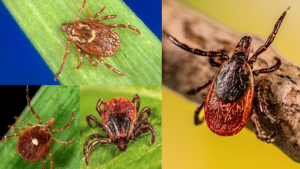
Rates of tickborne illnesses have steadily increased in the county over time. The Maryland Department of Health (MDH) maintains a tickborne disease dashboard that summarizes tick activity in the state.
Tickborne Disease Prevention
- Look for ticks in late spring through early fall, when they are most active.
- Limit direct contact with ticks by avoiding wooded and brushy areas with high grass and leaf litter. Also, walk in the center of trails.
- Wear long pants and long sleeves to help keep ticks off your body.
- Tuck shirts into pants, and pants into socks, to keep ticks on the outside of clothing.
- Wear light colored clothing to help spot ticks more easily.
- Use Environmental Protection Agency (EPA) registered insect repellents containing
- DEET;
- picaridin;
- IR3535
- Oil of Lemon Eucalyptus (OLE)
- Paraomenthane-diol (PMD)
- 2-undecanone
- Use repellent on exposed skin for protection that lasts several hours. Always follow product instructions.
- Parents should apply repellent to their children, avoiding hands, eyes, and mouth.
- Clothing may be pre-treated by using products that contain permethrin.
- Treat clothing and gear, such as boots, pants, socks and tents with products containing 0.5% permethrin, which remains protective through several washings.
- Alternatively, clothing pre-treated with permethrin may be purchased.
- To ensure elimination of ticks from clothing:
- Wash clothing in hot water.
- Cold and medium temperature water will not kill ticks effectively.
- If it is not possible to wash clothes in hot water then tumble dry on low heat for 90 minutes or high heat for 60 minutes.
- For dry clothing, tumble dry clothes in a dryer on high heat for 10 minutes to kill ticks.
- If the clothes are damp, additional drying time may be needed. The clothes should be warm and completely dry.
Removing Ticks
Use fine-tipped tweezers to grasp the tick as close to the skin’s surface as possible.
Pull upward with steady, even pressure. Don’t twist or jerk the tick; this can cause the mouth- parts to break off and remain in the skin. If this happens, remove the mouth-parts with tweezers. If you are unable to remove the mouth easily with clean tweezers, leave it alone and let the skin heal.
After removing the tick, thoroughly clean the bite area and your hands with rubbing alcohol, an iodine scrub, or soap and water.
Dispose of a live tick by submersing it in alcohol, placing it in a sealed bag/container, wrapping it tightly in tape, or flushing it down the toilet. Never crush a tick with your fingers.If you develop a rash or fever within several weeks of removing a tick, see your health care provider.
Tell the health care provider about your recent tick bite, when the bite occurred, and where you most likely acquired the tick.
Tick Identification and Testing
Tick Identification is available through the Johns Hopkins Lyme and Tickborne Diseases Research and Education Institute.
Disease testing is offered through the Tick Research Lab of Pennsylvania in East Stroudsburg, PA. Please note that non-Pennsylvania residents will have to pay a fee for tick processing.
If you are in the military, MilTICK is a free tick testing and identification service available to Department of War (DoW) personnel and their dependents.