Oral Rabies Vaccination Program
Harford County is starting a pilot Oral Rabies Vaccination (ORV) Program in September 2026. The program will place over 15,000 baits containing the rabies vaccine throughout Harford County to immunize thousands of wild raccoons and help prevent the spread of rabies.
Rabies
Rabies is a viral disease of mammals that is most often transmitted through the bite or scratch of an infected animal, such as a groundhog, cat, fox, raccoon, or bat. It is also spread when the infected animal’s saliva comes into contact with the eyes, nose, mouth, or open cut of a person or another animal. The virus attacks the nervous system of humans and other mammals.
Rabies is a significant public health threat since rabid animals can come in contact with people and their pets. Rabies is a fatal disease. While pets can be vaccinated against rabies, people exposed to rabies must undergo a costly series of shots to protect them from the disease.
The Vaccine
In 1997, the U.S. Department of Agriculture licensed Raboral V-RG as a safe vaccine for use with raccoons. This vaccine has been used successfully in Anne Arundel County, Maryland since 1998 and in more than 10 other states to control raccoon rabies.
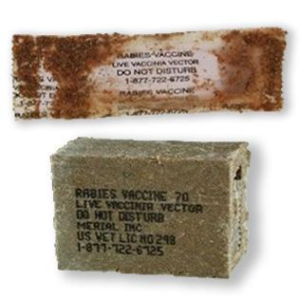 Raboral V-RG is a live-virus vaccine, but it does not contain the whole rabies virus and cannot cause rabies. Raboral V-RG has been proven to be safe and effective in immunizing raccoons and coyotes against rabies, and it has been shown to cause no harmful effects in more than 60 different species of birds and mammals, including dogs and cats. While the vaccine will not harm your dog or cat, Raboral V-RG does not replace the need for a conventional rabies vaccine administered by a veterinarian.
For humans, Raboral V-RG presents a low risk. Over 20 years and over 200 million doses of the vaccine have been distributed in the United States, Canada, and Europe with only two reported cases of human infection due to vaccine contact. Both individuals made a full recovery. While complications are rare, it is recommended that the vaccine should not be handled by anyone who is under 18 years old, is pregnant, is immunocompromised, or has a chronic skin condition. It is not recommended to remove a bait from your pet’s mouth as you may be accidentally bitten.
Vaccine Distribution 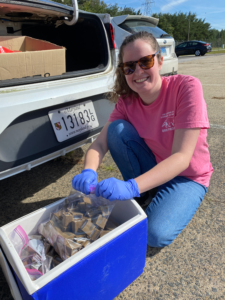
The bait that will be distributed for the pilot program is made of fishmeal and polymers. One version is a small brown brick that is approximately 0.75 inches thick by 1.25 inches square and contains a small packet of the liquid rabies vaccine, Raboral V-RG. The second is similar to a condiment packet (such as ketchup), which has been coated with a waxy fishmeal attractant for raccoons. Inside the packet is the liquid rabies vaccine. The raccoon must bite into the packet to be vaccinated.
Baits are placed by ground teams in likely raccoon habitats in Harford County parks and neighborhoods. The bait teams will travel in marked state vehicles.
Frequently Asked Questions
What if I find a bait near my home?
Leave it alone. If you don’t want the bait near your home, use gloves or put a packet over your hands to pick it up and toss it into the woods. Then, wash your hands. Bare hand contact with the bait alone is not a concern; however, it does have a strong fish odor, so handwashing is recommended.
What if my child picks up the bait?
If the packet containing the vaccine is not ruptured, wash your child’s hands with plenty of soap and water to help get rid of the fishy odor.
What if my child tears the vaccine packet or eats the bait?
It is not possible to get rabies from the vaccine. The offensive odor of the briquets usually discourages a child from eating the bait. However, in the unlikely event your child bites into the plastic packet containing the vaccine or otherwise has direct contact with the vaccine liquid, you should contact your child’s physician and notify the Harford County Health Department at 410-877-2300 for any follow-up action.
What if my pet eats the bait?
The bait and vaccine are not harmful to animals, including dogs, cats, ferrets, livestock and wildlife. The bait may cause diarrhea or vomiting in dogs, cats, or ferrets due to the high fat content of the bait.
What if my pet brings the bait into the house?
During bait placement and for at least two additional weeks, it is recommended that pets be kept indoors or on leashes outside. This will allow enough time for raccoons to eat the bait. If your pet does find the bait, discard the bait in the trash. Wear rubber gloves or put a plastic bag over your hands when discarding. Wash your hands after handling the bait and report any contact with the vaccine liquid to the Harford County Health Department at 410-877-2300.
Can this vaccine be used to vaccinate my dog or cat against rabies?
No, the vaccine is approved only for use in raccoons. You should have your dog, cat, or ferret vaccinated by your veterinarian or at a public rabies vaccination clinic offered by the Harford County Health Department or the Humane Society of Harford County. The law requires pets to be vaccinated against rabies.
Can I have some baits to distribute on my own?
The vaccine used in the ORV Project cannot be purchased for an individual’s use, and it is federally restricted for use in rabies control programs sanctioned by an approved federal or state agency. Extensive management and agency coordination are involved to make sure the vaccine is kept under strict temperature control and is distributed with close assessment of raccoon population and habitat, baiting densities, competitive species, distribution methods and frequency, public awareness, and safety procedures for humans and pets.
Why is the project carried out in the late summer and early fall?
This is a time when the baby raccoons are old enough to gather their own food; thus there is the possibility of reaching the largest number of raccoons with the bait. Although raccoons do not hibernate, they are less active during cold weather.
After this year’s project has been completed, do I still have to worry about rabies in the area?
Yes. The Harford County Health Department cannot ensure that all raccoons are vaccinated. Raccoons or other animals with rabies could enter the area after the baiting; however, the incidence of rabies should be reduced as the program expands.